ACTS OF LISTENING
Essay Six
The Places That Raised Us
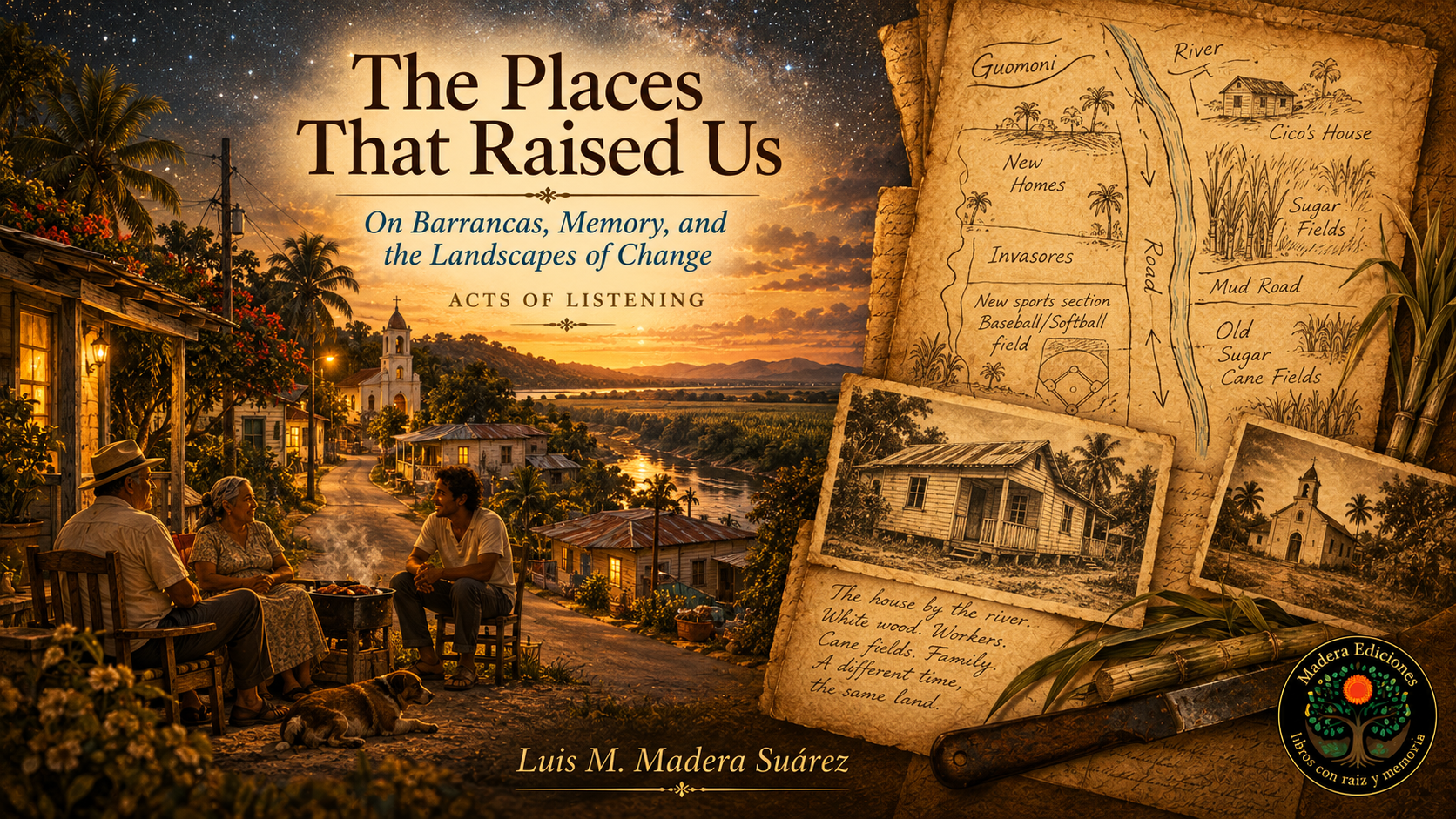
A place does not change all at once.
It changes in patches.
A new house appears where there had been none. A road is cut through land that once seemed open. New families arrive. Children begin running through streets where, not long before, nearly every face was familiar.
Memory notices the seams.
That is how I remember Barrancas.
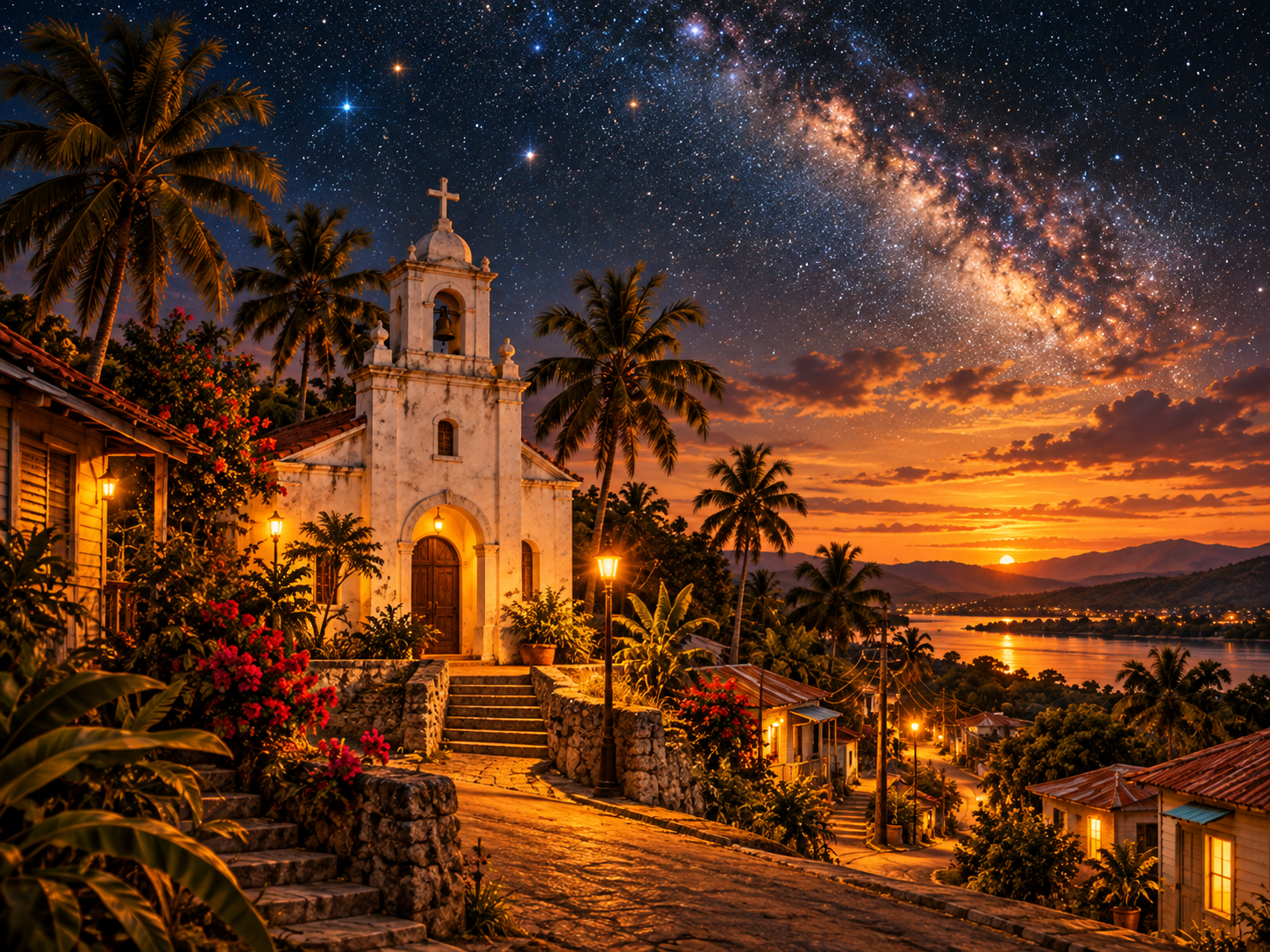
The barrio of my childhood was small and isolated, bordered by sugarcane and the Caribbean Sea. It had its own rhythm, its own families, its own way of recognizing who belonged where. There were roads everyone knew, houses identified as much by the people who lived in them as by their appearance, and a chapel that gathered the community into one place.
As a child, I did not think of any of that as history.
It was simply home.
The cane fields seemed permanent because I had never known them not to be there. The houses seemed permanent for the same reason. So did the school, the chapel, the paths people walked, the sound of children moving through the barrio.
Then the landscape began to change.
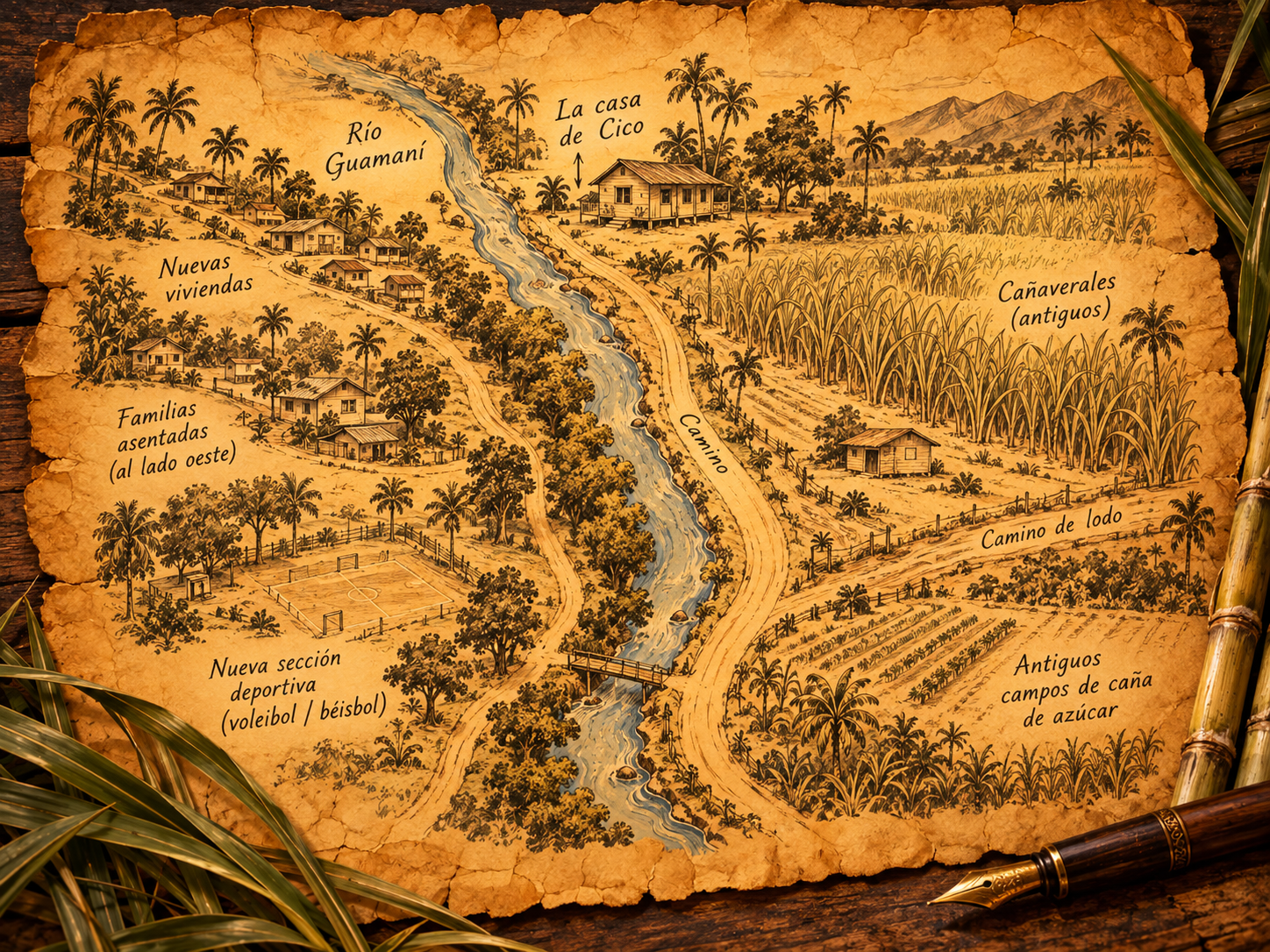
Several families in need settled on a stretch of cultivated land along the western side of the barrio, near the entrance. Modest houses began to appear.
New people arrived.
New faces moved through the streets and appeared at the chapel. Children whose families I had not known began running through a place where familiarity had once been almost automatic.
The barrio remained small.
But suddenly it contained strangers.
That change was not only physical.
It altered the social map.
There were people whose names we did not yet know. Families who had arrived by a different path into a place we had always understood through relationships. In a small barrio, knowing where someone lived often meant knowing something about who they were, whose child they were, who their grandparents were, or which house they belonged to.
The arrival of new families disrupted that certainty.
But they, too, were making a home.
That matters to me now in a way it probably did not when I was young.
The children running through Barrancas were doing what we had done before them. They were learning its roads, its chapel, its boundaries, its stories. Eventually, what had once seemed new became another layer of the barrio.
Later, a small urbanization was built.
To the north, however, the land remained open and cultivated.
The sugarcane has been gone for more than thirty years now. Other smaller crops grow there instead, but that part of Barrancas still feels different from the more settled areas of the barrio.
Near the river stands Cico’s house.
It is still the only house on that northern side.
Nearby are the ruins.
For a long time, I thought of Cico’s house as one of the fixed points in the landscape.
But Cico’s house had changed too.
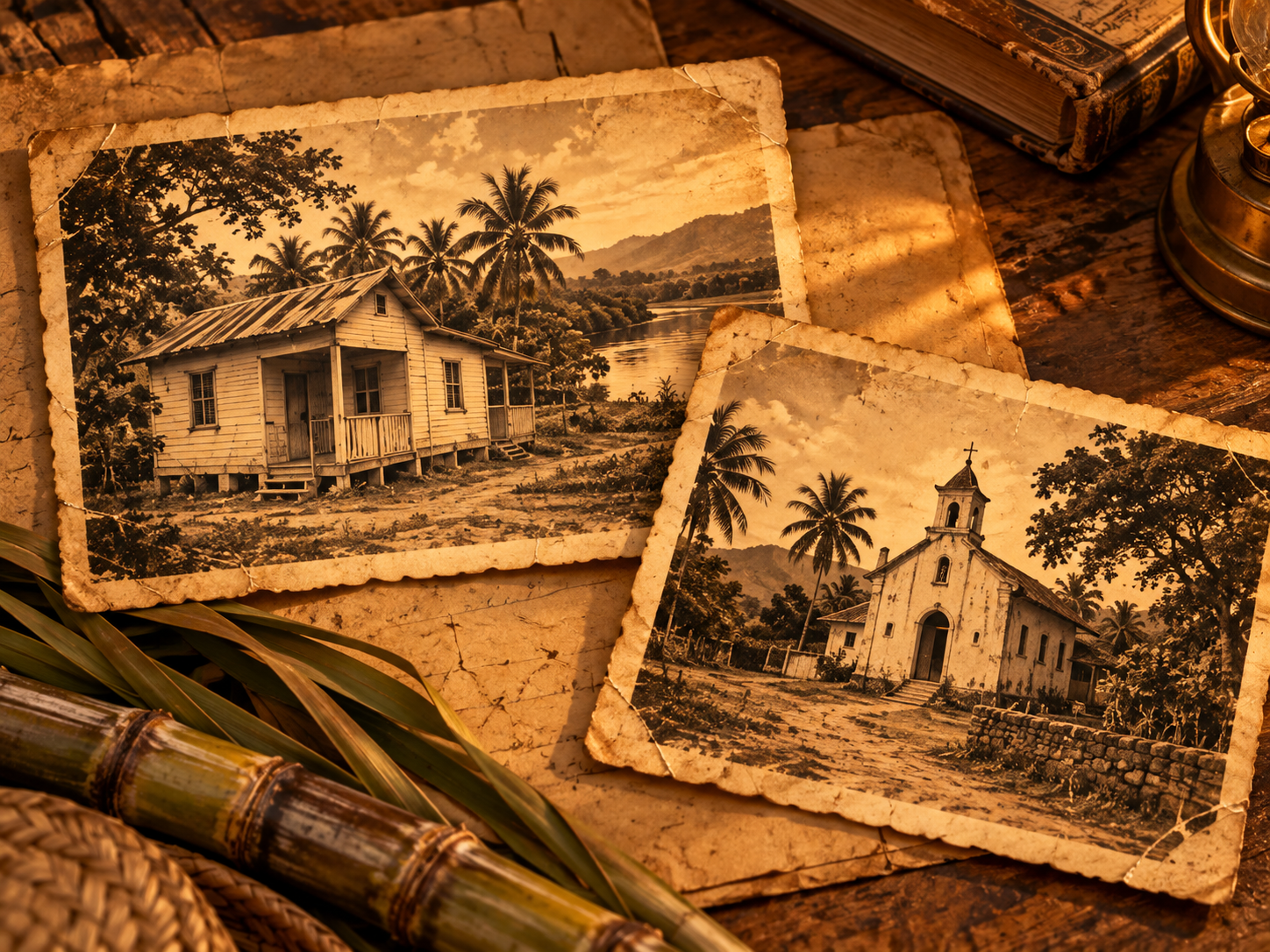
I remembered it as a simple white-painted wooden house, the kind of modest home that belonged to the working landscape of the cane fields, not to the world of hacendados.
Today, the wood is gone.
The house is cinderblock and concrete.
It still stands beside the river, still almost alone on that northern side of the barrio, but it is no longer the house I first knew.
That change carries its own sense of loss.
Not because the newer house is somehow less worthy.
People repair homes. They enlarge them. They rebuild them. Materials change. Families adapt.
Time does what time does.
But the white wooden house belonged to a world that has steadily disappeared: the sugarcane, the worker houses, the open cultivated land, the smaller social geography of Barrancas.
For years, I had thought of that house as one of the things that remained.
But even the things we use to measure change are changing themselves.
Even the landmarks of memory move with time.
The school changed too.
Once, the barrio seemed full of children.
Their voices moved through the streets, across the yards, around the school. Children walked there in the morning and returned home in the afternoon. The school was not simply a building. It was part of the daily sound of the barrio.
Now it sits idle.
And Barrancas itself has grown quieter with it.
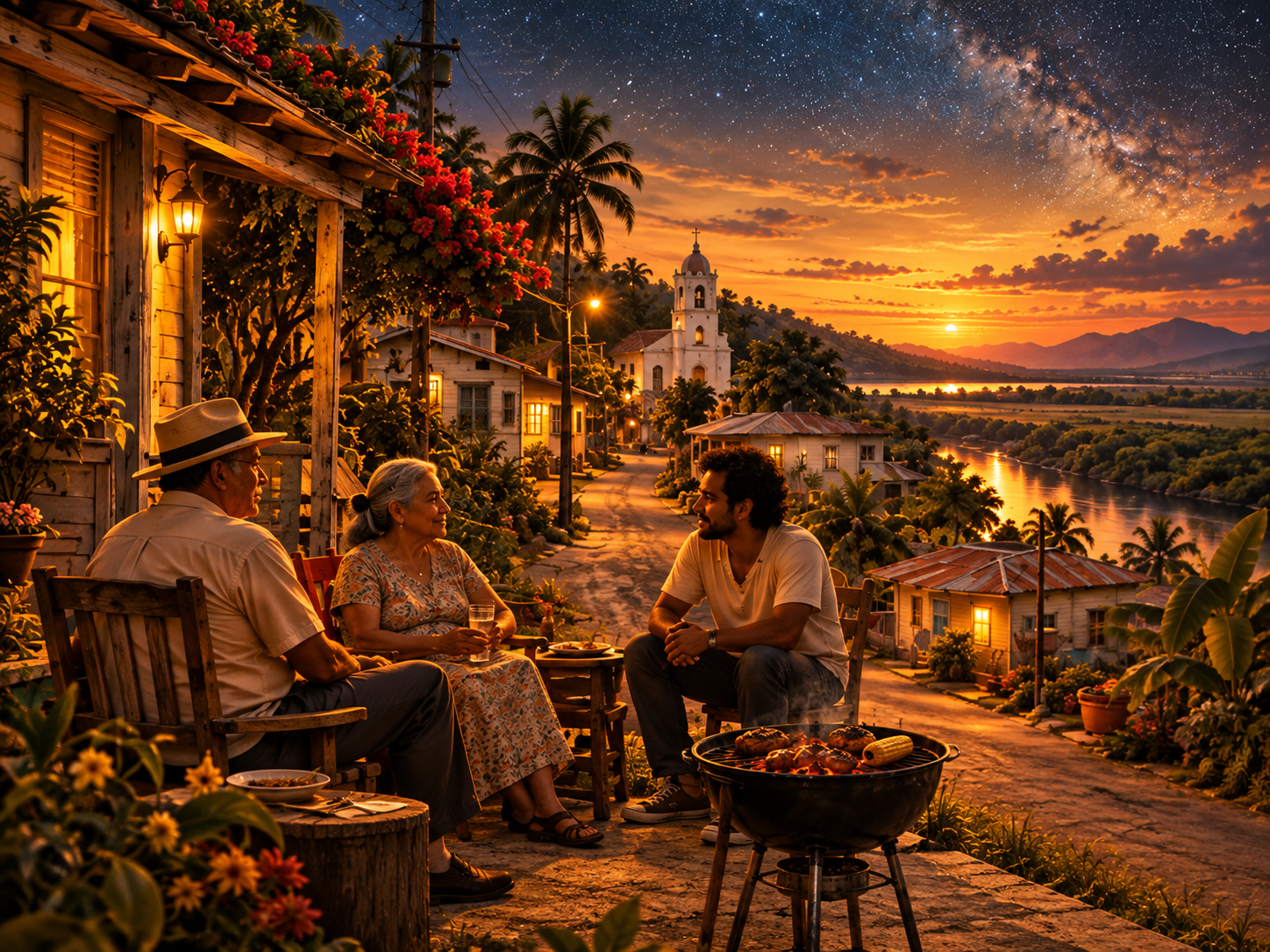
A few years ago, my mother, my father, and I sat outside in the front yard of their house in the early evening.
The day had cooled.
The light was beginning to fade.
I had pulled the grill around to the front of the house and cooked for them. Afterward, my father cleaned the grill while my mother and I sat nearby.
We greeted people as they passed.
Neighbors stopped to say hello.
Some of the faces were people I had known since I was a young man.
Now those faces carried the visible marks of time moving on.
I remember saying to my mother, “It’s quiet.”
But it was a different kind of quiet.
Not the quiet I remembered from late at night, when everyone was asleep and the crashing of the waves could carry through the darkness.
That quiet had once been part of the rhythm of Barrancas.
People went inside.
Lights disappeared.
Voices faded.
And the sea became louder because everything else had become still.
This quiet was different.
It felt older.
My mother looked at me and said, “Barrancas has become a retirement community.”
She was right.
Some of the sons and daughters of the barrio had come back to retire.
People who had left for work, for families, for lives elsewhere were returning to the place that had raised them.
They brought life back with them.
But it was a different kind of life.
The children were fewer.
The voices were older.
The rhythm had slowed.
Barrancas was still alive.
It was simply living at another age.
Later, after my father finished cleaning the grill, we sat together and looked up at the stars.
My father and I had a glass of wine.
My mother had water.
She never drank.
I remember telling them how much I missed that sky.
It seemed larger there.
Brighter.
This was a year or two after Hurricane Maria.
Electricity had returned to the houses, but the streetlights had not yet fully returned. Much of the artificial light that normally softened the darkness was still missing.
The sky seemed enormous.
We sat there together, looking upward.
For a little while, Barrancas seemed to exist between two times.
The barrio below us was older.
Quieter.
Changed.
And above it, the sky looked almost exactly as I remembered it.
Perhaps that is why returning to a place after many years can be disorienting.
You recognize everything and nothing at the same time.
A road is still there, but what once stood beside it is gone.
A house remains, but the house itself has changed.
A field still produces something, but not the crop that once defined the landscape.
The school remains, but the children are missing.
People return, but they return older.
And then, suddenly, the sky opens above you and something feels untouched.
I have come to think that places carry memory differently than people do.
People tell stories.
Places offer evidence.
A road.
A ruin.
A river.
A house standing by itself.
An empty school.
A chapel.
A cultivated field where sugarcane once grew.
But even that evidence is temporary.
Buildings disappear.
Wood becomes concrete.
Fields change crops.
Families move.
New families arrive.
The physical landscape capable of confirming our memories slowly becomes harder to consult.
You may still remember the white boards of a house.
You may still see the cane in your mind.
You may remember when the barrio seemed full of children.
You may remember lying awake and hearing the sea because everyone else had gone to sleep.
But fewer and fewer things remain that can answer back and say:
Yes.
It was like that.
Perhaps that is one reason I write about Barrancas.
Not to freeze it.
I do not think places can or should be frozen.
The families who arrived needed somewhere to live.
The children who came after us had as much right to make memories there as we did.
The people who returned to retire were not returning to preserve a museum.
They were coming home.
Barrancas changed because people continued living in it.
That is not the same as saying nothing was lost.
Both things can be true.
A place can gain something and lose something at the same time.
It can welcome new families while an older social world fades.
It can replace sugarcane with other crops and remain cultivated.
A wooden house can become concrete and still belong to the same family story.
A school can fall silent while people who once attended it return to spend their later years nearby.
Perhaps home is not a fixed place after all.
Perhaps it is a layered one.
The Barrancas I knew as a child still exists, but not entirely on the ground.
Part of it exists in memory.
Part of it exists in the people who remember.
Part of it exists in the stories we tell when someone points to a road or a house and says, “That was not always there.”
And part of it exists in the silences.
The silence of an empty school.
The slower quiet of an aging barrio.
The silence between one generation leaving and another returning.
The quiet beneath a sky made brighter by missing streetlights.
Listening to a place means learning to hear those differences.
The barrio of my childhood was not better because it was younger.
It was simply younger.
And I was younger inside it.
Now, when I return, I hear time differently.
Barrancas is still small.
Still somewhat isolated.
Still beside the Caribbean.
The river still runs past Cico’s house.
The land to the north is still cultivated.
People still stop to say hello.
Sons and daughters still come home.
But the place has moved forward, as places must.
So have I.
And perhaps that is what the places that raise us ultimately teach us.
They do not remain behind waiting for our return.
They keep living.
Our task is not to demand that they stay the same.
It is to listen closely enough to recognize what has changed, what remains, and what we are still carrying with us.
Acts of Listening is an ongoing series of essays exploring memory, Puerto Rican history, genealogy, storytelling, and the ordinary lives that continue to shape who we are.